
Coyotes, Bobcats, and Backyard Animals: Predator Awareness in the Antelope Valley |
Article Sub Headline |
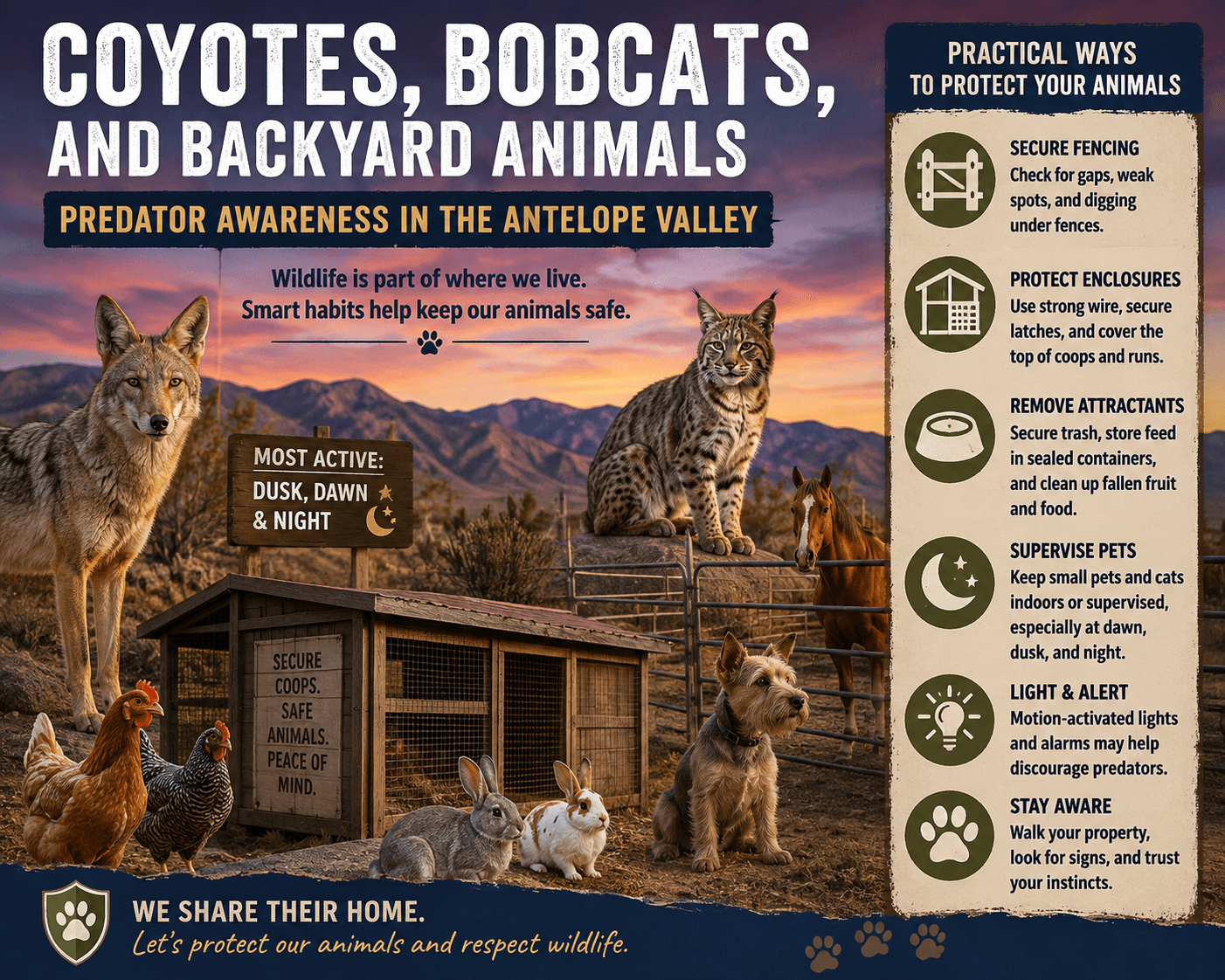
Living in the Antelope Valley means sharing the landscape with wildlife. From Palmdale and Lancaster to Acton, Agua Dulce, Littlerock, Lake Los Angeles, Quartz Hill, Rosamond, and the rural edges in between, coyotes, bobcats, hawks, owls, snakes, and even the occasional mountain lion are part of high desert life. For pet owners, horse families, and people with backyard animals, predator awareness is not about panic. It is about preparation.
Coyotes are one of the most common concerns for AV residents. They are adaptable, fast, and comfortable moving through neighborhoods, washes, open lots, ranch roads, and rural properties. Small dogs, outdoor cats, chickens, rabbits, ducks, and young livestock can all be vulnerable, especially around dawn, dusk, and overnight. A fence may slow a predator down, but it should not be treated as a complete safety system.
Bobcats are quieter and less visible, but they are still capable hunters. They can climb, stalk, and slip through areas that may seem secure at first glance. For families with chickens, rabbits, small pets, or cats that spend time outside, open-top enclosures are a weak point. A run or pen that keeps an animal from wandering may not be strong enough to keep a predator out.
The first step is to remove easy attractants. Do not leave pet food outside. Secure trash. Pick up fallen fruit. Keep chicken feed stored in sealed containers. Clean up around coops, barns, and feeding areas. Predators are often drawn in by smaller food sources first, including rodents. If your property becomes a reliable food stop, wildlife may continue returning.
Next, inspect the areas where your animals spend time. Gates should latch securely. Fencing should be checked for gaps, loose boards, weak wire, and places where an animal could dig under or squeeze through. Chicken coops and rabbit hutches should have secure tops, strong wire, and protected corners. For small dogs, supervised outdoor time is safest, especially early in the morning and after sunset.
Lighting and motion-activated devices may help discourage some wildlife, but they are not a guarantee. Predators can get used to repeated sounds or lights if there is still food, shelter, or easy access. The stronger strategy is layered protection: secure enclosures, clean feeding areas, supervised pets, and nighttime routines.
Cats are safest indoors, especially in rural and edge-of-town areas. Outdoor cats face risks from predators, cars, poison, disease, and injury. If a cat enjoys outside time, a protected catio or supervised enclosed area is far safer than free roaming.
Horse and livestock owners should also stay alert. Adult horses are not usually the easiest target, but foals, goats, sheep, poultry, barn cats, and injured animals can be at risk. Walk the property regularly. Check tracks, digging, broken fencing, disturbed feed areas, and signs that animals are nervous or refusing to enter certain spaces. If you see a predator, keep your distance. Do not feed it, corner it, or encourage interaction. Bring pets inside, secure small animals, and give wildlife a clear path to leave.
The Antelope Valley will always have wild neighbors. Responsible animal care means respecting that reality and building habits that protect both domestic animals and the wildlife that belong here too. |
0 Comments
Join the conversation
Be the first to comment
Share your thoughts above.